


88 Years Ago, Amelia Earhart was feared lost. Around the world, girls took it hard.


On July 19, the search for Amelia Earhart's plane would be officially ended.
It was 1937 and the nation's hopes for Earhart's rescue, like its hopes the Dust Bowl era was over, would be dashed that July.
🌏
In my historical novel, Unspoken, Ruby Lee Becker took it hard, too.
Like millions of girls and women around the world, she'd idolized Earhart as a role model when she showed that pilots could be females. Amelia Earhart headed out in late May 1937 in her custom-built Lockheed Model 10E Electra on what would be the first female around-the-world flight. In Unspoken, Ruby Lee saw flying as her ticket out, too, but she'd be heading back to the Dust Bowl. Which despite the headlines from the Texas Panhandle that July, 1937, was far from recovered.

Amelia Earhart volunteered as a nurse aid in 1918, caring for soldiers.
During the influenza pandemic she was herself infected while on duty with Canadian troops during World War I. After many surgeries and a debiliating year of recovery, she never overcame the chronic side effects. Studying mechanics that year she convalesced must have primed her urge to fly.

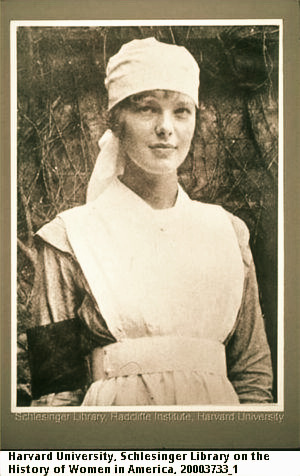

L to R: Earhart as a young graduate, a nurse aide (1918), and as a spokesperson (1929)
Earhart hired a flying instructor and worked to pay for her lessons.
As a photographer, truck driver, a stenographer, and with money tight, as a teacher and Settlement House social worker, she flew. Promoting flight through newspaper columns, she developed plans for a female pilots organization.
As a pilot, she raced—a pursuit many women pilots took up.
Because they weren't allowed to enter the mens' flying races, women flew in their own derbies, often setting records the male pilots couldn't.
Earhart set world records for female pilots, and made more inroads.
She was an early supporter of the Equal Rights Amendment, a good friend to First Lady Eleanor Roosevelt, was honored at the White House under Presidents Coolidge, Hoover, Roosevelt for her flying exploits, had her own line of practical clothing, appeared in ticker-tape parades, and made headlines wherever she went (aided by the promotional acumen of her manager and husband). As the New York Times wrote in tribute to the pioneering Amelia Earhart on July 20, 1937:
"She was in rebellion against a world that had been made, for women, too safe, too confining."


Flying with First Lady Eleanor Roosevelt (1933) and at her stop in Karachi, India (1937)
There's plenty more to read about Amelia Earhart.
Among the scores of biographies, novels, collections, and childrens' books about Amelia Earhart, these are the ones on my own bookshelf (which where invaluable when I wrote about the woman aviator whose daring and style captivated the world — and Ruby Lee, in Unspoken):

Learn more about Ruby Lee Becker's journey in Unspoken


Comments